Let’s face a modern truth. Our kids can spot a corporate mascot from far away. But they might confuse an oak leaf with a maple. We’re losing touch with nature for the sake of screens.
In Clarkston, a quiet change is happening. It’s about choosing sunlight over screens and real paths over feeds. I’ve seen a child’s curiosity sparked by a caterpillar’s journey.
This isn’t just about getting fresh air. It’s a strategic recalibration. We’re using parks and preserves as outdoor classrooms. The lessons are in mud, bird calls, and the changing seasons.
Think of it as investing in your child’s attention span. The rewards are wonder and a bit of dirt on their knees. Outdoor education boosts brain power, health, and emotional strength.
This article is your guide to outdoor adventures. We’re making a simple walk into a big adventure.
Where to Walk: Township Parks and Nearby Preserves
Forget the map for a moment. The real navigation is between a polished park path and a working farm’s gravel track. Your choice of venue isn’t just a pin on Google Maps; it’s the script for your afternoon. Near Clarkston, two flagship locations offer distinctly different flavors of outdoor time. Let’s break them down.
Independence Oaks County Park is your classic, well-manicured municipal park. Think of it as nature with guardrails. Its paved arteries are the suburban parent’s best friend, allowing you to push a stroller on autopilot while your mind wanders. You’ll glide through mature forests and near quiet wetlands. It’s serene, predictable, and perfectly stroller-friendly. This is where you go to decompress, not to discover.
Then, there’s Clarkston Family Farm. This is where the lesson plan gets delicious. Gravel paths weave through raised garden beds and past animal paddocks. It’s a “farm-to-table” literalist’s dream. Here, a simple walk is punctuated by the smell of damp soil and the clucking of chickens. Kids don’t just see trees; they see where their food comes from. It’s a hands-on, multisensory experience that beats any cartoon.
Choosing between them isn’t about better or worse. It’s about desired outcome. The park offers contemplative space. The farm serves up agro-education. My advice? Do both. The comparative analysis yields the richest data for your family’s enjoyment index.
| Feature | Independence Oaks County Park | Clarkston Family Farm |
|---|---|---|
| Trail Surface | Paved, smooth asphalt | Compact gravel, well-maintained |
| Best For | Quiet contemplation, easy family hikes | Interactive learning, sensory exploration |
| Sensory Vibe | Forest sounds, wetland breezes | Animal sounds, garden scents, earthy smells |
| Stroller-Friendliness | Excellent – designed for wheels | Good – gravel is firm but bumpy |
| Wildlife Spotting | Birds, turtles, deer | Chickens, goats, pollinators |
So, which one wins? The answer, of course, depends on the day’s mission. Need a brain break and a guarantee of smooth rolling? The park’s paved paths are your sanctuary. Craving a dose of reality and a chance for the kids to get dirty? The farm’s gravel routes await. These trails make family hikes easy and fun, but they do it in completely different ways. Consider this your menu. Now, go order an adventure.
Trail Difficulty, Surfaces, and Mileage
Think of a trail’s specs as a guide for managing little ones’ expectations. A successful family hike is not just about following a map. It’s about creating small victories along the way. This is where the real strategy of family hikes starts.
Mileage is key. It’s a promise you make to a preschooler before they even put on their shoes. A “short loop” under a mile is usually a success. A “moderate” two-miler might need snack-based rewards. A 4.5-mile loop is best saved for later.
The beauty of local nature trails is their flexibility. You’re not locked into a long, hard hike.
Now, let’s talk about the ground you’ll walk on. The surface affects your pace. Paved paths, like at Independence Oaks, are smooth and fast. They’re perfect for strollers.
Packed gravel paths, found at Clarkston Family Farm, offer a steady pace. Dirt paths? Those are for brave days with waterproof boots.
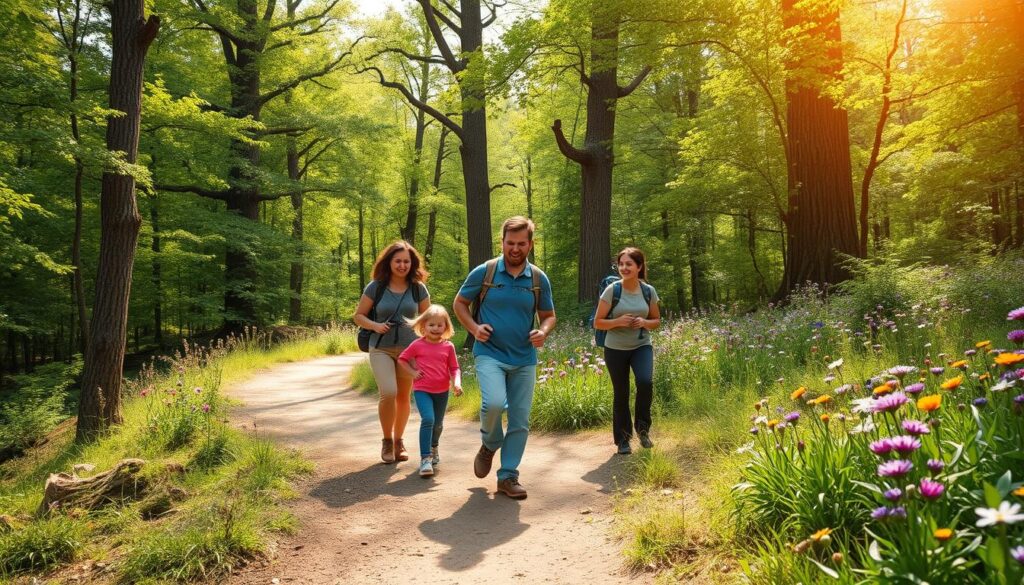
This variety is your greatest asset. A short walk to a farm’s chicken coop and back is a win for a toddler. You’re creating a story everyone can enjoy before the whining starts.
So, analyzing trail difficulty is about planning ahead. Choosing the right length and surface ensures a happy end to your family hike. The best local nature trails give you this control, making a simple walk a shared success.
Stroller and Little‑Kid Readiness Tips
Finding stroller-friendly nature trails can seem like a quest. But in Clarkston, they’re real. Think of your stroller as a mobile base, not a barrier.
Look for trails that are easy to navigate. Clarkston’s trails follow a simple rule: keep everything within three feet of the path. It’s like nature’s own design.
The key is to keep interesting things close. This way, you avoid getting lost in the woods. It’s all about finding cool stuff without straying too far.
For little ones who love to explore, this is ideal. They can wander, find a pinecone, and then get back in the stroller easily. It’s all about balance.
Here’s a tip: treat your stroller like a Mars rover. Stock it with essentials:
- Snacks and hydration: Fuel for little adventurers.
- Wipes and a spare layer: For when things get messy or cold.
- A small “treasure” bag: For collecting rocks and sticks.
But let the kids lead the way. They should get out to explore. The stroller is there to support their adventure.
Don’t think a stroller limits the fun. Watch a three-year-old navigate a trail in their stroller. Clarkston’s nature trails make every walk an adventure. It’s hiking designed for families to enjoy together.
Seasonal Wildlife and Leave‑No‑Trace Basics
If family hikes were TV shows, Clarkston’s preserves would offer a new series every season. Each season brings new animal appearances and exciting plot twists. Nature here is a blockbuster, not a static green screen.
Winter isn’t just a break. It’s a chance to learn practical skills. It’s like taking homesteading 101. Tracking animal prints in snow teaches you to observe closely. Building a small fire (where allowed) shows you how to be resourceful.
Spring changes the game. The forest floor becomes a live botany lab. Budding trees and early wildflowers are the stars. It’s the perfect time for a stroller-friendly walk, where you’re on a mission to find the season’s first bloom.
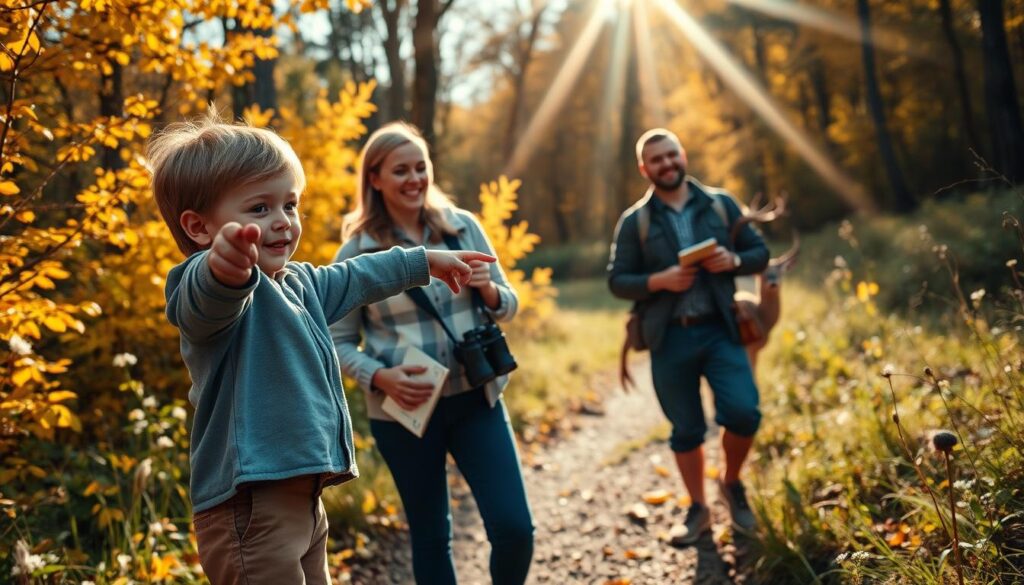
Summer brings the insect orchestra. Dragonflies patrol the pond edges. Butterflies flit between meadows. It’s a live-action documentary, and your kids have front-row seats.
Fall is the grand finale. It’s the harvest episode. Squirrels hustle. Migrating birds pass through. The air smells of change. This seasonal rhythm turns a simple walk into a serialized adventure.
Now, let’s talk ethics. “Leave-No-Trace” sounds like a spy’s creed. For kids, reframe it: “You are a guest in someone else’s home.” The home of the deer, the frog, the beetle. Good guests don’t trash the place.
The rule is simple: Take only pictures, leave only footprints. It’s not about restriction; it’s about respect. Spotting a butterfly is a thrill. Understanding we shouldn’t chase it is wisdom. That’s the core of responsible family hikes.
How do you teach this? Start with distance. Use binoculars or just observe quietly. Explain that getting too close stresses animals. It’s like someone barging into your room unannounced. Nobody likes that.
Next, tackle the “take” part. Pretty rocks and fallen leaves are tempting. But if every visitor took one, the trail would be stripped bare. Instead, take a photo. Make a drawing later. The memory lasts longer than the object.
Lastly, the “leave” part. Pack out all your trash—even the apple core. It decomposes, yes, but it’s not native to that spot. It’s litter. A stroller-friendly path is easy to keep clean. Use the under-seat basket for a small trash bag.
This philosophy turns a walk from passive consumption to active conversation. You’re not just consuming scenery. You’re engaging with a living, breathing world. You’re teaching your crew to be custodians, not just consumers. That’s the real adventure.
Packing for Short vs. Longer Loops
Packing for nature trails changes a lot, depending on the length of your trip. For a short walk, you pack light. For a long hike, you need to plan everything out. The goal is to avoid common problems like hunger or thirst.
Knowing how to pack for family hikes is key. It helps turn a chaotic outing into a fun experience.
For a short hike, pack like you’re grabbing a coffee. Bring a water bottle, some applesauce, and a band-aid. It’s all about being quick and light.
But for a hike over 90 minutes, you need to pack more. Think of it like preparing for a movie shoot. You’ll need snacks, water, and a first-aid kit for any small injuries. It’s all about being prepared.
Let’s talk about the basics. You always need water. For short hikes, a reusable bottle is fine. For longer family hikes, a hydration bladder is better. It makes drinking water easy.
Your snacks should have a story. Start with something crunchy, then something chewy, and end with chocolate. Choose foods that are easy to eat. Think grapes, cheese sticks, and granola bars.
Clothing is also important. Use the Onion Theory for layers. Start with a moisture-wicking base layer, add insulation, and finish with a waterproof shell. Avoid cotton because it holds moisture and gets cold quickly. Go for synthetic or wool instead.
Your first-aid kit should grow with your hike. For short walks, a few band-aids are enough. For longer hikes, add antiseptic wipes, blister pads, and allergy meds. It’s all about being ready for anything.
| Category | Short Loop Kit (30-60 mins) | Longer Loop Kit (90+ mins) |
|---|---|---|
| Hydration | One water bottle per person | Hydration bladder or multiple bottles; electrolyte packets |
| Snacks | Single pouch, one granola bar | Multi-act “buffet”: crunchy, chewy, sweet; 2-3 items per person |
| First-Aid | Adhesive bandages, a wipe | Blister pads, antiseptic, gauze, personal medications, tweezers |
| Clothing | Light jacket tied to waist | Full layering system: wicking base, insulating mid, weather shell |
| Extras | Sunscreen, hat | Sunscreen, bug spray, hat, whistle, portable phone charger |
The key is to be flexible with your packing. It’s not about being prepared for the worst. It’s about being ready for the usual things that happen on nature trails. Get your packing right, and you’ll only have to worry about enjoying the moment.
Safety: Heat, Ticks, and Trail Etiquette
Trail safety is like the operating system of an adventure. It turns threats into manageable risks. Clarkston’s approach is like air traffic control, not helicopter parenting. A 5:1 kid-to-guide ratio ensures safety without taking away the fun.
Start with a good plan. Hike in the cool morning hours. This makes your walk comfortable, even on stroller-friendly paths. Always carry enough water to stay hydrated—dehydration slows you down.
Ticks are unwanted guests. Follow the CDC’s advice to keep them away. Treat your clothes with permethrin and check yourself thoroughly after hiking. This is as important as wearing a seatbelt.
Trail etiquette is like a social rule. It keeps trails enjoyable for all. Always yield to uphill hikers and keep dogs on leashes. Remember, you’re in a quiet space, not a sports arena.
This isn’t being paranoid. It’s smart preparation. By managing heat, avoiding ticks, and being polite, you respect the wild. For more on outdoor safety, check out our community guidelines.
Remember, you’re the lifeguard on the trail. Carry water, bug spray, and use your common sense. This way, the adventure can be thrilling without fear.
Printable “Trail Bingo” for Kids
So, you’ve got the snacks, a path that’s easy for strollers, and know how to spot ticks. What’s missing? A bit of fun. Think of it as the magic that turns “look at that tree” into a quest.
Trail Bingo is more than a game. It’s a secret training for your kid’s eyes to see more. A bingo card with squares for “a bird singing,” “something fuzzy,” or “a twisted root” turns a walk into a hunt. It’s like the guided nature walks in Clarkston, where learning and fun blend together.
This isn’t just about checking boxes. It’s about learning to see patterns and wait patiently. The usual “Are we there yet?” turns into “I need to find a smooth rock!” It’s all about keeping things simple yet engaging.
The best part? You don’t have to make it yourself. I found a free printable camping scavenger hunts kit that includes bingo cards. Just print it, clip it to a board, and your next hike will be an adventure.
This is the Sage’s final tip for your Clarkston adventures. The best memories come from the simplest things. The real keepsake isn’t from a shop. It’s the dirt on your boots and the bingo card in your pocket.