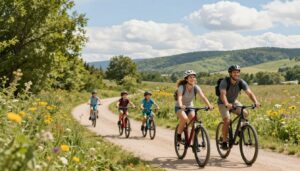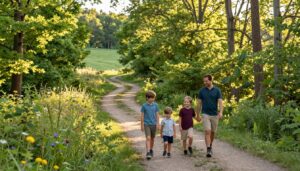
We’re raising a generation that knows logos better than local plants. In our world full of screens, outdoor education is more than helpful—it’s a game-changer.
Children turn from screen-addicts to curious explorers quickly when they hit the trails. Clarkston’s efforts show what our grandparents always knew: learning in nature is powerful.
Studies reveal the benefits of outdoor time. It boosts brain power, physical health, and emotional strength. It’s like finding out your backyard is a science lab with fresh air.
This isn’t just about nature walks Clarkston style. It’s about changing how we see learning. Switching screen time for nature time is a smart parenting move.
The evidence is clear. Watch kids on family hikes where science meets curiosity. Biology becomes a fascinating bug to study, not just a chapter in a book.
Guided Nature Walks
Forget what you think you know about family hikes. The guided programs at Independence Oaks and Clarkston Family Farm have turned nature walks into something amazing. They mix science and adventure, making every step a lesson.
These walks are not like old field trips. The Learning Adventures program is like a detective agency for nature. Kids learn about science through fun activities like music and movement.
Children start to see the world in a new way. A simple log becomes a whole ecosystem. Bird calls become a scientific symphony. It makes learning feel like an adventure, not a chore.
Here’s how these experiences compare to traditional hiking:
| Feature | Traditional Hike | Guided Nature Walk | Educational Value |
|---|---|---|---|
| Trail Exploration | Self-guided | Expert-led narration | Contextual learning |
| Activity Focus | Exercise/distance | Observation/discovery | Critical thinking |
| Learning Approach | Incidental | Structured themes | Curriculum-based |
| Engagement Level | Variable | Multi-sensory immersion | Retention boost |
The genius of these nature walks Clarkston programs is their subtlety. Kids learn about nature while having fun. It’s like learning through play.
For parents, it’s a win-win. You get to enjoy the outdoors while experts teach your kids. These programs make learning fun for everyone. You’ll leave with memories and a newfound appreciation for nature.
Guided adventures show that the best classrooms have no walls. The most memorable lessons often involve getting dirty. The trails are waiting for your family’s next adventure.
Animal & Plant Discovery
Seeing urban kids meet farm animals for the first time is like watching a special kind of show. It’s like they’re learning basic biology again, but with more sounds and less books. Clarkston Family Farm’s programs make this curiosity into meaningful engagement.
The Homesteading Club activities show kids how wool comes from sheep, eggs from chickens, and honey from bees. These aren’t just ideas anymore. They’re real, living things that kids remember better than any picture.
Learning about plants becomes exciting when you get to taste them. Kids who won’t eat veggies at home will try cherry tomatoes they picked. This isn’t just outdoor education – it’s a way of learning through taste.
The farm’s Sprouts Camp program makes these discoveries into learning journeys. Kids see how things grow from seeds to harvest and from birth to maturity. They’re not just seeing nature – they’re part of it.
| Activity Type | Age Group | Learning Focus | Hands-On Element |
|---|---|---|---|
| Baby Animal Interaction | 3-6 years | Life Cycles & Care | Gentle Petting & Feeding |
| Edible Plant Walk | 5-10 years | Plant Identification | Tasting & Harvesting |
| Seed Planting Station | 4-8 years | Growth Processes | Soil Preparation & Planting |
| Butterfly Lifecycle | 6-12 years | Metamorphosis | Caterpillar Observation |
These nature walks Clarkston style create episodic memories. The smell of fresh hay, the feel of chicken feathers, and the taste of strawberries – these experiences make learning unforgettable.
Children understand ecosystems because they’ve worked with them. They know where food comes from because they’ve picked it themselves. This way, family hikes become more than walks – they become learning adventures.
Your child might not become a farmer, but they’ll know where food comes from. They might even feel proud of holding a chicken and living to tell the tale.
Seasonal Schedules
Clarkston Family Farm shows us that nature is always exciting, without needing TV. Their schedule is based on nature’s own rhythm, with new things to learn every quarter. It’s not just about binge-watching; it’s about real survival skills.
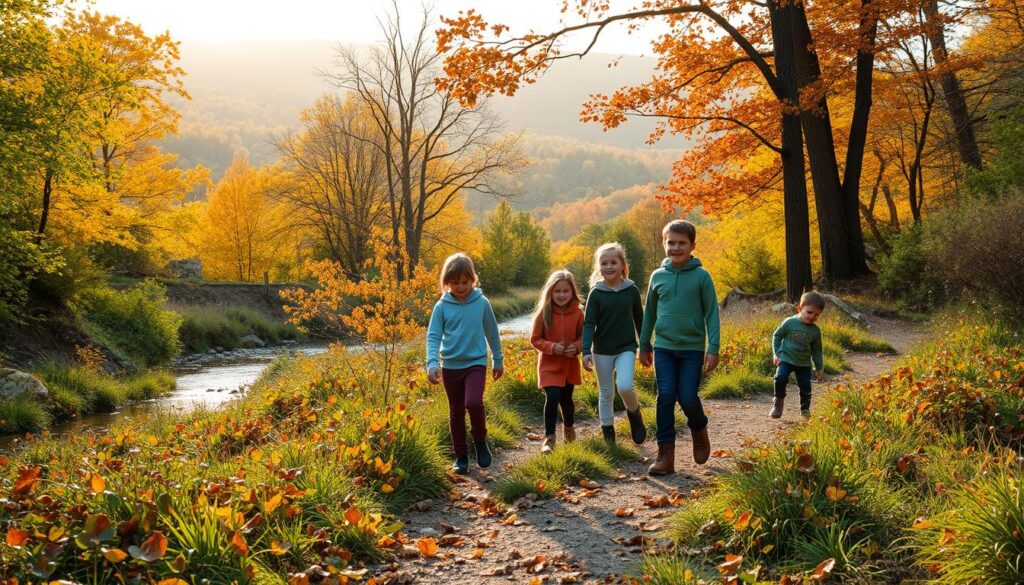
Winter turns into a time for learning homesteading skills. Imagine learning to build fires, not just yelling at your smart home. The Winter Series teaches you how to survive in the suburbs.
Spring brings gardening programs that show how food grows. You’ll learn that carrots don’t come in plastic bags naturally. These sessions make you think differently about supermarket food.
Fall celebrates the farm-to-table movement. The Fall Series lets you connect with your food through harvest experiences. It’s a hands-on way to learn about where your food comes from.
This schedule creates excitement, like a new menu at your favorite restaurant. Each quarter offers new family hikes and discoveries that follow nature’s rhythms.
| Season | Program Focus | 2025 Dates | 2026 Dates |
|---|---|---|---|
| Winter Series | Homesteading & Survival Skills | Jan 15-Mar 10 | Jan 14-Mar 9 |
| Spring Series | Plants & Gardening | Mar 25-May 20 | Mar 24-May 19 |
| Fall Series | Farm Animals & Harvest | Sep 9-Nov 4 | Sep 8-Nov 3 |
This scheduling makes outdoor education a journey, not just events. People keep coming back, learning more each time. It’s like building skills that grow over time.
The beauty of these nature walks Clarkston programs is they connect us to nature’s cycles. It’s a way of learning that works because it repeats with changes, like hit songs.
Why choose streaming when nature has its own calendar? The farm shows that the best learning doesn’t need screens. It just needs curiosity and the right shoes.
Stroller-Friendly Trails
Finding stroller-friendly trails can be tough. You want to explore nature without the hassle. Luckily, Clarkston has trails that are both fun and easy to navigate.
Independence Oaks County Park has paved paths that are great for strollers. These paths go through forests and near wetlands. This way, kids can enjoy nature without getting tired.
Clarkston Family Farm has gravel paths that are perfect for strollers. These paths let kids see where food comes from. They can get up close to gardens and vegetable patches.
What makes these trails special? They follow the three-foot principle. This means that everything interesting is right by the path. Kids can see butterflies, interesting rocks, and even play in natural spaces.
| Trail Feature | Independence Oaks | Clarkston Family Farm |
|---|---|---|
| Surface Type | Paved asphalt | Packed gravel |
| Best For | Jogging strollers | All-terrain strollers |
| Nature Highlights | Forest canopy, wetlands | Gardens, farm animals |
| Learning Opportunities | Ecosystem education | Agricultural education |
These trails make family hikes easy and fun. You can learn about nature without getting bored. The paths are wide, so you can walk together and enjoy the views.
Every season brings new things to see on these trails. In spring, you’ll see wildflowers. Summer has berries, and fall offers colorful leaves. Each visit is a new adventure.
What’s great about these trails is that they never talk down to kids. Tree roots become math problems, bird songs are games, and leaves are puzzles. They make learning fun.
When planning outdoor education with kids, remember: the best adventures are on easy paths. These trails make learning easy and fun for everyone.
Dress for the Weather Tips
I’ve seen many outdoor education sessions fail because of bad clothes choices. At Clarkston Family Farm, we take weather preparation seriously. We want kids to have fun, not get wet and cold.
Dressing for family hikes is not about looking good. It’s about wearing layers that work like a military strategy. We call it the Onion Theory, where you can add or remove layers as needed.
Start with moisture-wicking fabrics to keep dry. Cotton gets wet and cold, ruining the fun. Synthetic or wool materials keep you dry, even when it rains.
At Clarkston, we focus on clothes that let kids move freely. They should be able to climb and explore without getting stuck in their clothes. Our nature walks Clarkston programs are a hit because kids forget they’re wearing special gear.
| Weather Condition | Base Layer | Mid Layer | Outer Layer | Clarkston Pro Tip |
|---|---|---|---|---|
| Sunny & Warm | Lightweight synthetic | None | UV-protective shirt | Light colors reflect heat |
| Cool & Breezy | Moisture-wicking top | Fleece jacket | Windbreaker | Packable layers in backpack |
| Rainy Days | Quick-dry base | Insulating layer | Waterproof shell | Sealed seams prevent leaks |
| Cold Weather | Thermal underwear | Insulated vest | Water-resistant coat | Cover extremities first |
Don’t overlook footwear. Cute sneakers are not good for muddy trails. Waterproof boots with good grip are essential for safety and fun.
The goal is not to look good for photos. It’s to keep the weather from ruining the learning experience. When kids are comfortable, they learn more and enjoy nature more.
Our all-weather programs at Clarkston Family Farm show that the right clothes make a big difference. Kids become excited to explore when they’re dressed right.
Safety Rules and Bug Safety
Outdoor safety is about setting boundaries that let kids explore freely. At top programs, safety is like a silent partner. You might not notice it, but it’s essential.
Clarkston Family Farm knows how to do it right. They have a 5:1 camper-to-teacher ratio. It’s not about watching kids all the time. It’s about having enough staff to keep everyone safe while they have fun.
Deer Lake Beach takes safety to the next level. They have certified lifeguards watching the swimming areas. It’s reassuring to know professionals are there to help you have fun safely.
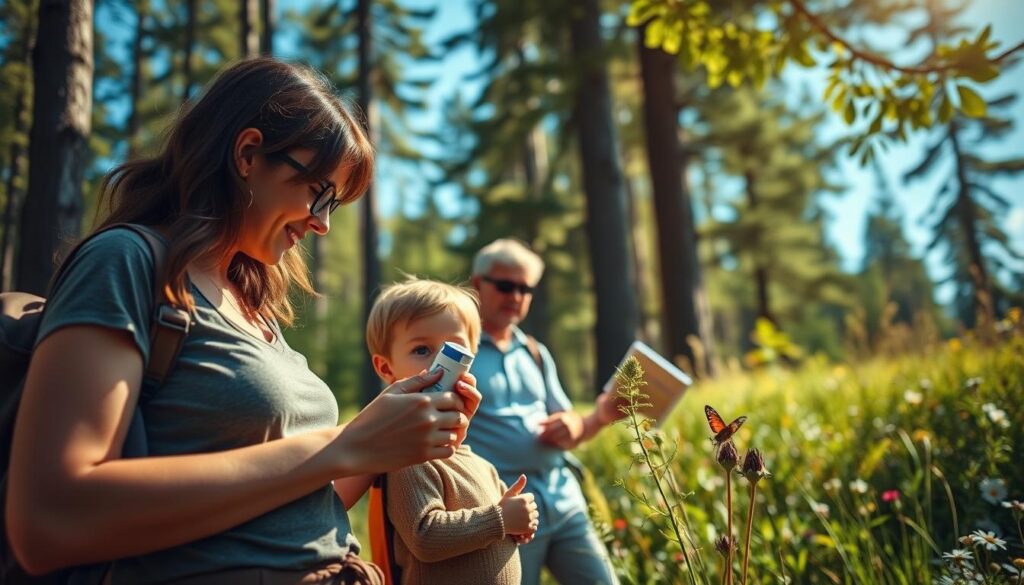
Bugs like ticks and mosquitoes can ruin the fun. The CDC has great tips on how to avoid bug bites outdoors.
Good outdoor programs teach kids about bug safety. They don’t just use bug spray. They teach kids to spot danger and how to stay safe.
Here’s how Clarkston’s safety ratios compare to other educational settings:
| Program Type | Student-to-Staff Ratio | Safety Level | Adventure Level |
|---|---|---|---|
| Public School Field Trips | 15:1 | Moderate | Limited |
| Standard Summer Camps | 8:1 | Good | Good |
| Private Schools | 7:1 | Very Good | Very Good |
| Clarkston Family Farm | 5:1 | Excellent | Excellent |
This isn’t about keeping kids safe by wrapping them in cotton wool. It’s about managing risks well. The best nature walks Clarkston offers get this balance right.
They create places where kids can get dirty and have fun. Parents can relax knowing their kids are learning in a safe environment. Safety is the foundation for exploration, not a barrier.
The right outdoor education approach makes safety an enabler, not a restriction. It’s what makes top programs stand out. Families keep coming back for these family hikes and adventures.
Special Nature Events
Clarkston Family Farm’s special nature events are where learning meets fun. These aren’t just nature walks Clarkston folks might see. They’re educational adventures dressed up as magic.
The Gingerbread Mini Camps turn holiday fun into learning. Kids decorate cookies and learn about baking science. It’s like Martha Stewart and Bill Nye teaming up for a tasty outdoor education program.
Winter brings Polar Animal sessions that make cold science fun. Kids learn how arctic animals survive the cold through fun experiments. Winter Wonderland programs turn snow into a teaching tool.
“Brooms and Brews – The Magical Power of Herbs” is like a Hogwarts workshop. It teaches about plants while making herbal drinks. It’s Harry Potter meets horticulture class.
These events are educational magic. They turn family hikes into unforgettable adventures. Kids remember these experiences, showing that learning can be fun.
The farm’s team knows that learning is best when it’s fun. Their events teach about nature and make people love it. That’s the magic of these nature walks Clarkston families love.
Photo & Picnic Tips
Most family hikes end with someone crying over spilled juice boxes and bad photos. Deer Lake Beach and Clarkston Family Farm show us how to picnic without disaster. They teach us how to enjoy the outdoors without it turning into The Hunger Games with ants.
Location intelligence separates picnic pros from amateurs. Look for spots with natural backrests and shade. Deer Lake Beach’s western picnic tables are perfect, with sunset views and afternoon shade.
Your food plan should be as detailed as a Marvel movie timeline. Stick to finger foods like pre-cut fruits, wrap sandwiches, and cheese sticks. Avoid messy foods that can turn into soup in the sun. Clarkston Family Farm suggests durable, easy-to-carry foods that can handle toddler mishaps.
Photography during outdoor adventures needs stealth. Aim for real moments, not forced smiles. Here are some tips:
- Shoot from hip level for authentic child perspectives
- Use burst mode during exploration moments
- Focus on hands examining plants or insects
- Embrace messy hair and dirt-smudged cheeks
The best nature walks in Clarkston happen when you’re fully present. Set your phone to rapid-fire mode and join the fun. You’ll get great photos and memories – a win-win that even David Attenborough would love.
How to Register
Signing up for Clarkston Family Farm’s outdoor programs is like a mission. January registration is as fast as a Broadway ticket sale. Sessions fill up quickly, like autumn leaves in a storm.
The cancellation fee is $25, a small but painful price. Waitlists move fast, giving second chances when plans change. The cost reflects the high quality of these experiences.
For similar outdoor adventures in Toronto, check out camp programs. They have high demand and require careful planning.
To succeed, set reminders, know the cost, and be ready early. In outdoor education, being prepared means a great experience for your child.